Laser cutting and laser engraving are two processes that use laser machines. As a result, they fall into the same category as a process called laser marking methods. Due to them falling in the same category, it is possible to confuse them with each other. Therefore, this article aims to talk about the disparity and the similarity between the two methods.
What is Laser Cutting?

Laser cutting is a process that involves using a focused laser beam to cut through a material. Hence, it is suitable for creating customizable patterns, shapes, and designs on a workpiece. Like any other laser marking process, it is non-contact, i.e., the machine does not directly touch the material. Nevertheless, the laser beam can cut the material by melting, vaporizing, or burning the part. Typically, a complete process involves cutting and then doing Parts Deburring to produce a perfect product.
Laser cutting is suitable for several materials, including metals (e.g., aluminum and brass), plastics (ABS, Polycarbonate), ceramics, wood, and stone.
What is Laser Engraving?

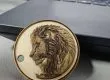
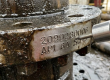
Laser engraving is another laser marking method that involves using laser beams to engrave pictures and designs in the form of images, barcodes, serial numbers, etc., on an object. Laser engravers give permanent marks by vaporizing the desired part on the object. They are compatible with wood, plastics, coated metals, and leather.
Differences between Laser Cutting and Laser Engraving
Both processes are categorized under the laser marking procedure. This is because they use laser marking machines to generate beams that can vaporize part or all of a product. Although similar, below are some differences between laser cutting and laser engraving:
· Principle of Cutting
Laser cutting involves using a laser beam to cut through the entire thickness of the material by melting, burning, and vaporizing. Most cuts are perfect. Hence, they don’t need a second touch-up. On the other hand, laser engraving involves cutting to the desired depth without cutting through the entire thickness. Therefore, engraved materials only have their surfaces vaporized to the required depths.
· Laser Power
One of the most important disparities in the laser cutting vs. laser engraving process is based on the machines used. Here, the laser power is a definitive parameter. On the one hand, laser cutters are machines with a laser power above 60W. High power is important for cutting, although it depends on the material’s type and its thickness. On the other hand, laser engravers have a laser power below 60W.
The difference in laser power also restricts the types of laser machines compatible with the process. For example, most laser cutting machines are fiber or CO2 laser markers. However, laser engravers can include other laser marking machines, such as UV or green lasers.
Keynote: Laser engravers can cut thin sheets of non-metals.
· Lens Focal Length
Another important difference in comparing the two processes is the focus lens used in the laser machines. Laser cutting machines have a lens with a long focal length. Consequently, they deliver smooth cut edges, making them aesthetically pleasing. On the other hand, laser engraving machines have a lens with a short focal length. Consequently, they give an object a finer spot size, improving the engraving quality.
· Cutting Speed
Generally, the laser cutting process is very slow due to the time and energy it takes to completely vaporize a material. However, this depends on the material you are cutting and its dimensions. For example, a thin metal will take less time than a thick one, while a thin plastic will take less time than a thin metal. Furthermore, the slow cutting speed ensures that the forefront is smooth and of good quality.
Laser engraving has a higher cutting speed as the process does not involve cutting. Aside from that, it aids efficiency and reduces contact time. However, cutting at too high a speed can lead to low-quality marking.
· Design File Format
Laser cutting machines use vector design files, while engraving machines use vector and raster design files.
The vector design format is applicable in laser work that requires thin lines, and it involves using laser beams to trace the lines and curves of the design vector by vector. Vector design files can be in EPS, AI, or CDR formats.
The raster design format applies to laser working materials such as wood, stamps, and papers. It involves building the design from pixels and engraving it line by line or point by point. Raster files are in JPG or PNG format.
· Use of Assist Gas
Assist gases such as helium and oxygen help in expelling the molten material seen during the laser cutting process. As a result, they are highly recommended for cutting thick materials. Aside from expelling molten materials, they also cut a smooth finish.
On the other hand, laser engraving does not require to assistance of gas because it can create a pop that affects the outlook of the surface finish. However, you can use it when the engraving process produces too much smoke, as the gases prevent the smoke from affecting the marking quality.
Get the Best Laser Cutting and Engraving Machine
Laser cutting vs. laser engraving is a common comparison in laser marking. However, both processes are different, and understanding what they entail can help make the right selection. This article introduced both processes and their disparity.
Are you looking for a laser marking machine suitable for cutting or engraving? Kindly go through our recommended machines or contact us.
FAQs
What is the single most fundamental difference between laser cutting and laser engraving?
The single most fundamental difference is the depth of the cut. Laser cutting is a process that uses a laser beam to cut all the way through the entire thickness of the material. Laser engraving, on the other hand, only vaporizes the surface of the material to a desired depth, without cutting all the way through.
The guide mentions a difference in laser power. What are the typical power ranges for these two processes?
The power ranges are a key differentiator. The guide states that laser cutters are typically machines with a power level above 60W, which is necessary to cut through materials. Laser engravers generally have a lower power level, below 60W, as they are only altering the surface.
How does the focal length of the lens differ between a cutting and an engraving machine?
The focal length is different to optimize for each process. A laser cutting machine uses a lens with a long focal length, which is what helps to deliver a smooth cut edge. A laser engraving machine uses a lens with a short focal length, which creates a finer spot size for better engraving quality.
What are 'assist gases' and in which process are they most commonly used?
Assist gases, such as helium and oxygen, are used to help expel the molten material that is created during the laser process. They are highly recommended and most commonly used in laser cutting, especially when working with thick materials, as they help to create a smooth finish.
The text mentions two types of design files. Which file type is used for both cutting and engraving?
Vector design files are used for both processes. The guide notes that laser cutting machines use vector files, such as EPS or AI, to trace the lines of the design. Laser engraving machines can use both vector files and raster files, such as a JPG.
In terms of speed, which process is generally slower and why?
Laser cutting is generally the slower process. This is because of the significant time and energy that is required for the laser beam to completely vaporize and cut through the entire thickness of a material.
Can a laser engraving machine also be used for cutting?
Yes, a laser engraver can be used for some cutting tasks. However, the guide includes a keynote that specifies that laser engravers can only cut thin sheets of non-metal materials due to their lower power.
What is the main purpose of performing 'Parts Deburring' after the laser cutting process is complete?
The main purpose of deburring is to ensure a perfect, finished product. While most cuts are clean, this final step is performed to remove any small burrs or rough edges that may have been left behind during the cutting process.