Search “handheld laser engraver for metal” and a $199 gadget sits next to a $4,000 machine. They do not carry the same laser. On metal, the laser source decides the result, not the handheld shape.
At HeatSign, we sell all three kinds, so we see this mix-up every week. This guide splits them by source: what each one leaves on steel, what it costs, when a handheld makes sense at all, and which one fits your parts.
Blue diode handheld
About $200–700
450 nm blue light, 5–20 W
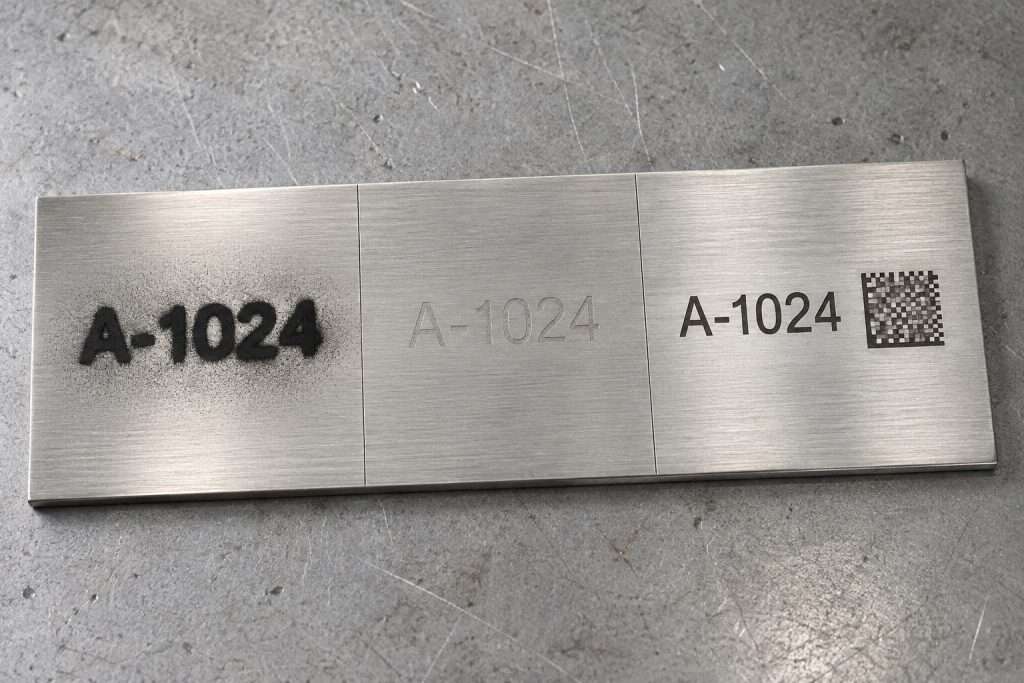
Bare steel: needs a marking spray first
Best for: wood, leather, anodized aluminum, gifts
Low-power infrared handheld
About $900–1,650
1064 nm, 2–5 W
Bare steel: light marks on small items, under 0.1 mm (0.004 in) per pass
Best for: logos, tags, mixed materials
Industrial fiber handheld
About $1,400–4,200
1064 nm pulsed, 20–50 W
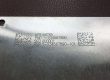
Bare steel: serial numbers, heat numbers and Data Matrix codes, all day
Best for: factories, stock yards, field assets
Marking steel parts on the shop floor? See which handheld fits your parts, or send us a photo of the part.
Can a handheld laser engraver really mark bare metal?
Yes, if it has an infrared source. A 1064 nm fiber or infrared laser marks bare steel, stainless and aluminum directly. A blue 450 nm diode handheld mostly needs a marking spray on bare metal, so it suits coated or anodized parts.
The reason is how the light arrives. An industrial fiber laser (light amplified inside a glass fiber) fires pulses that last nanoseconds, billionths of a second, at very high peak power. Each pulse melts or vaporizes a thin layer of metal. A blue diode shines steadily through a larger spot, so on bare steel it mostly just heats the surface.
Diode makers say the same. One of them tells its buyers: “For crisp engraving on bare metal… choose an infrared laser.” Hobby users report faint marks on bare stainless with 10 W or stronger diodes, but only after slow passes and a lot of tuning. Our laser engraver for stainless steel guide explains why, and which machine suits stainless parts.
Laser source | Bare steel and stainless | Anodized or painted metal | How deep | All-day use |
|---|---|---|---|---|
Blue diode, 5–20 W | Needs spray; faint at best | Good | Surface only | Hobby duty |
Infrared, 2–5 W | Yes, light marks | Good | Under 0.1 mm per pass | Short jobs |
Industrial fiber, 20–50 W | Yes, fast and dark | Good | Deeper with more passes | Built for shifts |
Infrared handhelds sit in the middle. The xTool F2 uses a 5 W 1064 nm source, and its maker says it “can engrave but not cut metal.” LaserPecker rates the 2 W infrared in its LP4 at under 0.1 mm per pass.
That is enough for a logo on a knife or a pet tag. It is not enough for a heat number that must survive shot blasting.
For the wider hobby vs industrial picture, including duty cycle (how long a machine can run without a break) and source life, read our laser engraving machine guide.
Which handheld laser fits your metal parts?
Most shops marking steel parts need a 30 W split fiber handheld. Yard and field work suits a 50 W battery model or the 4 kg (8.8 lb) cordless unit. For wood, leather and light metal marks, choose a dual-light model.
Each HeatSign handheld laser engraver for metal below has a 1064 nm source. Pick by where the parts sit and what the mark must survive.
 Split fiber handheld, 30–50 W · $1,950–3,8001.5 kg head, 7-inch touch screen, plug-in or battery. For serial numbers and heat numbers on steel, in the shop or the yard.See the portable fiber laser marker →
 Cordless fiber handheld, 20 W · from $2,200All-in-one 4 kg unit, about 2 hours per charge. For quick marks on site with no cable to drag.See the cordless metal laser printer →
 Dual-light handheld, 10 W blue + 2 W infrared · from $1,650Wood, leather, plastics and light marks on stainless and aluminum.See the dual-light laser engraver →
Need deep marks that survive paint or water? Use a handheld dot peen marker. To see every portable model side by side, visit our handheld and portable laser markers page.
What does each type leave on steel, stainless and aluminum?
On bare steel and stainless, only an industrial fiber handheld gives fast, scannable serial numbers and heat numbers. Infrared handhelds etch under 0.1 mm per pass on small items. Diode handhelds work well on anodized aluminum and paint, not bare steel.
Metal | Blue diode | Infrared | Industrial fiber |
|---|---|---|---|
Carbon steel, bare | ✗ Spray only | ~ Light grey | ✓ Dark, fast |
Stainless 304 / 316 | ✗ Faint at best | ~ Small logos | ✓ Serial numbers, Data Matrix codes, color marks with MOPA |
Anodized aluminum | ✓ Good | ✓ Good | ✓ MOPA gives the darkest black |
Painted or blasted steel | ~ Removes paint only | ~ Light marks | ✓ Removes paint and marks the metal under it |
Rough castings | ✗ No | ✗ No | ✓ Yes |
Your metal not in the table? Send us a photo of the part and we will tell you which source marks it.
Three jobs show the fiber end of the range:
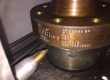
Foundry, Saudi Arabia
Marks 7-digit numbers on rough sand-cast iron, bronze, steel and aluminum parts with a HeatSign portable fiber laser.
About 1–3 s per number
Fabrication shop, USA
Marks heat numbers (the batch ID the steel mill gives each melt) on 304 and 316 stainless with a HeatSign battery handheld. Extra passes turn stainless yellow, so the shop watched both on video, then ordered.
One pass: shallow but permanent
Pipe fittings plant
A 60 W portable fiber laser marks carbon and stainless fittings along their length.
About 0.1 mm on stainless, 0.2 mm on carbon steel
Paint and coatings are their own topic; see laser engraving painted metal. For black marks on anodized aluminum, a MOPA source (one that can change its pulse length) works best, as our MOPA vs Q-switched guide explains.


When does a handheld beat a benchtop laser for metal parts?
Choose a handheld when the part is too big or heavy to move, or when you mark at several sites. If parts fit under a benchtop lens, a desktop fiber laser is faster to set up, steadier and usually cheaper.
A handheld brings the laser to the part: steel beams in a stock yard, a 2-tonne casting, a mold on the press, a pipe already in the rack. Here is how marking on site works with a HeatSign split handheld. Its marking head weighs 1.5 kg (3.3 lb) and sits on a 1.75 m (5.7 ft) cable.

- 1
Set the head on the part
The cone or foot rests on the surface, so the focus distance stays fixed. On round parts, use a V-block (a notched support that holds round stock) or a small stand.
- 2
Preview, then fire
A red light frame shows where the mark will land. Line it up, then press the button.
- 3
Fit the mark to the area
The marking field is 100×100 mm (4×4 in) or 150×150 mm. Tubes from 12 mm (0.5 in) work with a smaller field. Raised weld beads need enough focus depth, so test first.
- 4
Power it
Plug in at the bench, or order the battery version for the yard. HeatSign’s 22.2 V, 15 Ah battery runs about 3–4 hours.
An equipment rental company in Estonia marks asset numbers on machines spread across its sites. It started with a 30 W portable fiber laser and came back for a 50 W one.
When a laser is the wrong tool
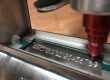
A customer whose steel profiles sit in water asked us for a handheld laser. We pointed them to a handheld dot peen marker instead. Dot peen (a carbide pin that punches rows of dots into the metal) goes much deeper, so the mark survives water, rust and repainting.
If your parts fit on a table, compare benchtop options in our desktop laser marking guide.
How much does a handheld laser engraver for metal cost?
Blue diode handhelds cost about $200–700 and infrared models about $900–1,650. Industrial fiber handhelds run about $1,400–4,200. HeatSign’s 50 W battery handheld is $3,100, or about $3,510 delivered to the US with freight.
Typical machine prices, US dollars
$0$1,500$3,000$4,500
HeatSign models: dual-light $1,650 · cordless 20 W $2,200 · 50 W battery $3,100
The machine price is only part of the bill. Add these before you compare quotes:
- Battery or plug-in. On HeatSign split handhelds, the battery is chosen at order time. Plan it up front.
- Freight. HeatSign’s battery stores about 333 Wh. Lithium batteries over 100 Wh ship by air as dangerous goods (IATA lithium battery rules), so ask for a delivered price.
- Safety glasses rated for 1064 nm, for everyone near the beam.
- Fume extraction if you mark painted, coated or plated metal. A small laser fume extractor covers one handheld.

Want a delivered price to your country? Get a quote by email or WhatsApp with the model and your address.
Prices here come from listings we checked while writing this guide and from HeatSign’s own price list. See current models and prices on our portable fiber laser marking machine page.
Is a handheld laser safe to use in a shop?
Yes, if you treat it as a Class 4 laser (the highest hazard class), because every open-beam metal engraver is one, consumer models included. Use eyewear rated for 1064 nm, a marked work zone, fume extraction on coated parts and a key switch or interlock.
Consumer makers say the same. xTool’s own FAQ says the F2 “remains a Class 4 laser device because you can operate it with its protective enclosure open.” For what each class means, see laser classes explained.
- Glasses rated for 1064 nm, plus 450 nm if the unit also has a blue diode. Our OD4 vs OD6 safety glasses guide explains the ratings.
- A marked work zone, with no shiny panels reflecting toward walkways.
- Fume extraction on painted, galvanized or plated parts.
- A key switch or interlock (a switch that cuts the beam), and a trained operator.

HeatSign’s laser machines are reported to the FDA’s CDRH (the FDA office that oversees laser products). Sunglasses and welding masks do not protect against 1064 nm light.
What else do buyers ask about handheld lasers for metal?
What type of laser do you need to engrave metal?
A 1064 nm infrared source. Use a fiber laser for serial numbers and Data Matrix codes on production parts, or a low-power infrared module for light marks on small items. A blue 450 nm diode marks bare metal only through a marking spray.
Are cheap handheld laser engravers worth it for metal?
For gifts, tags and anodized aluminum, yes: a $200–700 diode handheld does the job. For heat numbers on bare steel, no. It needs spray, marks slowly and is not built for shift work. HeatSign’s fiber handhelds start at $1,950.
Can a handheld laser engraver cut metal?
No. Handheld engravers from 2 to 50 W mark metal; they do not cut it. xTool says the same about its 5 W infrared F2. Cutting sheet metal takes a separate laser cutting machine rated in kilowatts.
Not sure which handheld your parts need?
The most common mistake we see is buying by wattage. A 10 W diode looks strong on the box, then fails on bare steel. A 20 W fiber handheld looks weak, then marks a heat number in a few seconds.
So before you buy a handheld laser engraver for metal, start from the part, not the spec sheet. Send HeatSign a photo of the part, where it sits and how many you mark a day. We will tell you which laser source fits and what it costs delivered.
Sources
- xTool F2 FAQ (infrared power, metal capability, laser class)
- LaserPecker LP4 product FAQ (infrared depth per pass)
- US FDA, Center for Devices and Radiological Health: laser products
- IATA lithium battery guidance (batteries over 100 Wh)