Before a factory buys a laser marker, the safety team usually asks two questions: “What class is it?” and “What do we need around it?”
Laser classes are the answer to the first question. They rank a laser by how much harm its beam can do, from Class 1 (safe in normal use) to Class 4 (can burn eyes and skin and start fires). The class then tells you the second answer: which controls, signs, training and glasses you need.
Here is the short version for laser marking. Every fiber, CO2 and UV marking laser is Class 4 inside.
Put it in a closed cabinet with door interlocks, and the whole machine becomes Class 1. Run it open or handheld, and you treat it as Class 4.
What Are the 7 Laser Classes?
The international standard IEC 60825-1 sorts lasers into seven classes: 1, 1M, 2, 2M, 3R, 3B and 4. The class depends on how much light can reach a person. Class 1 is safe in normal use. Class 4 is above 0.5 W and can harm eyes and skin, even from reflections, and start fires.

Class | Power limit (visible, continuous) | What it can do | Common examples |
|---|---|---|---|
Class 1 | Safe under all normal use | No eye risk. May hide a stronger laser inside a closed cover. | Laser printers, CD players, enclosed marking stations |
Class 1M | Like Class 1 for the naked eye | Unsafe if viewed through binoculars or a magnifier. | Some fiber-optic and survey lasers |
Class 2 | Up to 1 mW | Visible only. The blink reflex protects you, but do not stare. | Barcode scanners, red aiming beams on markers |
Class 2M | Like Class 2, wider beam | Unsafe through optical tools. | Some line and level lasers |
Class 3R | Up to 5 mW | Low risk, but a direct hit in the eye can hurt. | Many laser pointers and levels |
Class 3B | Up to 500 mW (0.5 W) | Direct beam is an eye hazard. Diffuse (scattered) reflections are usually safe. | Lab lasers, some light shows |
Class 4 | Above 500 mW | Burns eyes and skin, even from scattered light. Can start fires and make fumes. | Laser marking, cutting and welding, surgery |
Limits shown are for visible, continuous beams. Invisible lasers such as fiber (1,064 nm), CO2 (10.6 µm) and UV (355 nm) have no Class 2, and pulsed lasers use energy-per-pulse limits.
The US FDA uses Roman numerals for the same idea: Class I, IIa, II, IIIa, IIIb and IV. Since FDA Laser Notice 56, makers can label products to IEC 60825-1 instead, so you may see either system on a machine.
Which Hazards Come With Each Laser Class?
Classes 1 and 2 are safe in normal use. Class 3R and 3B can injure the eye if the direct beam enters it. Class 4 adds three more hazards: reflected and scattered light can hurt eyes, the beam can burn skin, and it can start fires and produce fumes.
No hazardHazard with optics or staringHazard
Class | Direct beam, eye | Reflected light, eye | Skin | Fire |
|---|---|---|---|---|
Class 1 | No | No | No | No |
Class 1M | With optics | No | No | No |
Class 2 / 2M | If you stare | No | No | No |
Class 3R | Yes, low risk | No | No | No |
Class 3B | Yes | Mirror-like only | At the top of the range | No |
Class 4 | Yes | Yes, even scattered | Yes | Yes |
Two points catch people out. First, fiber, CO2 and UV beams are invisible. You do not see the danger, and there is no blink reflex.
Second, a shiny metal part under a fiber laser acts like a mirror. That is why open Class 4 markers need glasses for everyone in the area, not only the operator.
What Does Each Laser Class Mean in Practice?
Class 1 products need no special steps. Class 2 needs a warning label and no staring. Class 3R needs care and training. Class 3B needs controls, signs and eyewear. Class 4 needs the full set: engineering controls, a laser safety officer, a controlled area, training and rated eyewear.
Class 1 and Class 1M
A Class 1 laser is safe under every normal use. Many Class 1 products hide a much stronger laser behind a cover, like a laser printer or an enclosed marking station.
The cover is what makes it safe. Never defeat an interlock or open a service panel while the laser can fire. Class 1M is safe to the naked eye, but not through binoculars, microscopes or magnifiers.
Class 2 and Class 2M
Class 2 lasers are visible and limited to 1 mW. If the beam hits your eye, you blink within about a quarter of a second, and that protects you. Staring on purpose can still cause harm.
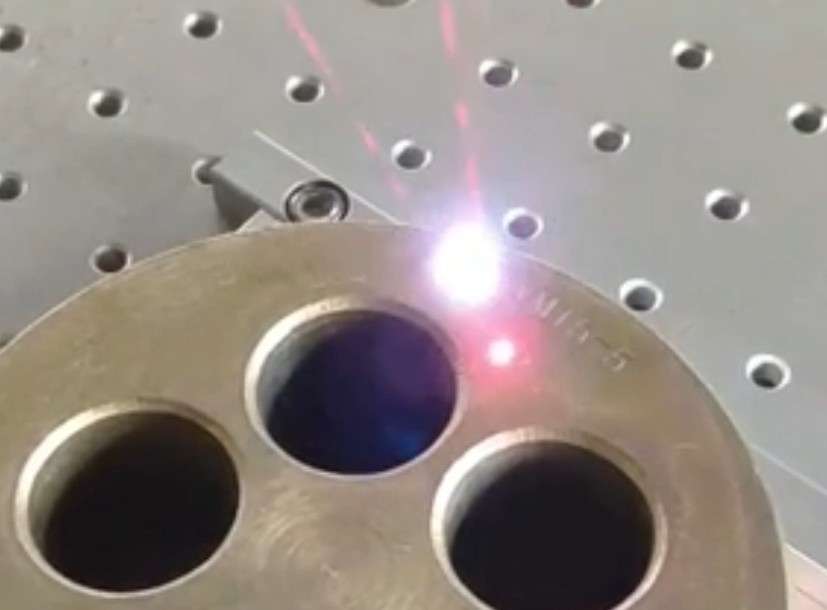
The red aiming beam on a laser marker is usually Class 2. It shows where the mark will land, but the invisible marking beam that follows is Class 4.
Class 3R and Class 3B
Class 3R lasers go up to 5 mW, five times Class 2. A direct hit in the eye carries a small risk. Older labels call this Class IIIa.
Class 3B lasers go up to 0.5 W. The direct beam, or a mirror-like reflection, can injure the eye in a moment.
Users need training, eyewear, and a key or interlock to stop casual use. Under ANSI Z136.1, sites using Class 3B or 4 lasers should name a laser safety officer.
Class 4
Class 4 starts above 0.5 W, and there is no upper limit. Industrial marking lasers, at 3 W to 100 W, sit far above that line. The beam can burn skin, scattered light can harm eyes, and it can ignite paper, cloth and dust.
Class 4 lasers are legal and widely used in industry. What the law and the standards require is that you control them. The next sections show how.
What Class Is a Laser Marking Machine?
The laser source in every fiber, CO2 and UV marking machine is Class 4. An open desktop, flying or handheld marker is used as a Class 4 product. A fully closed station with interlocked doors and a filtered window is a Class 1 machine, so operators work without glasses.
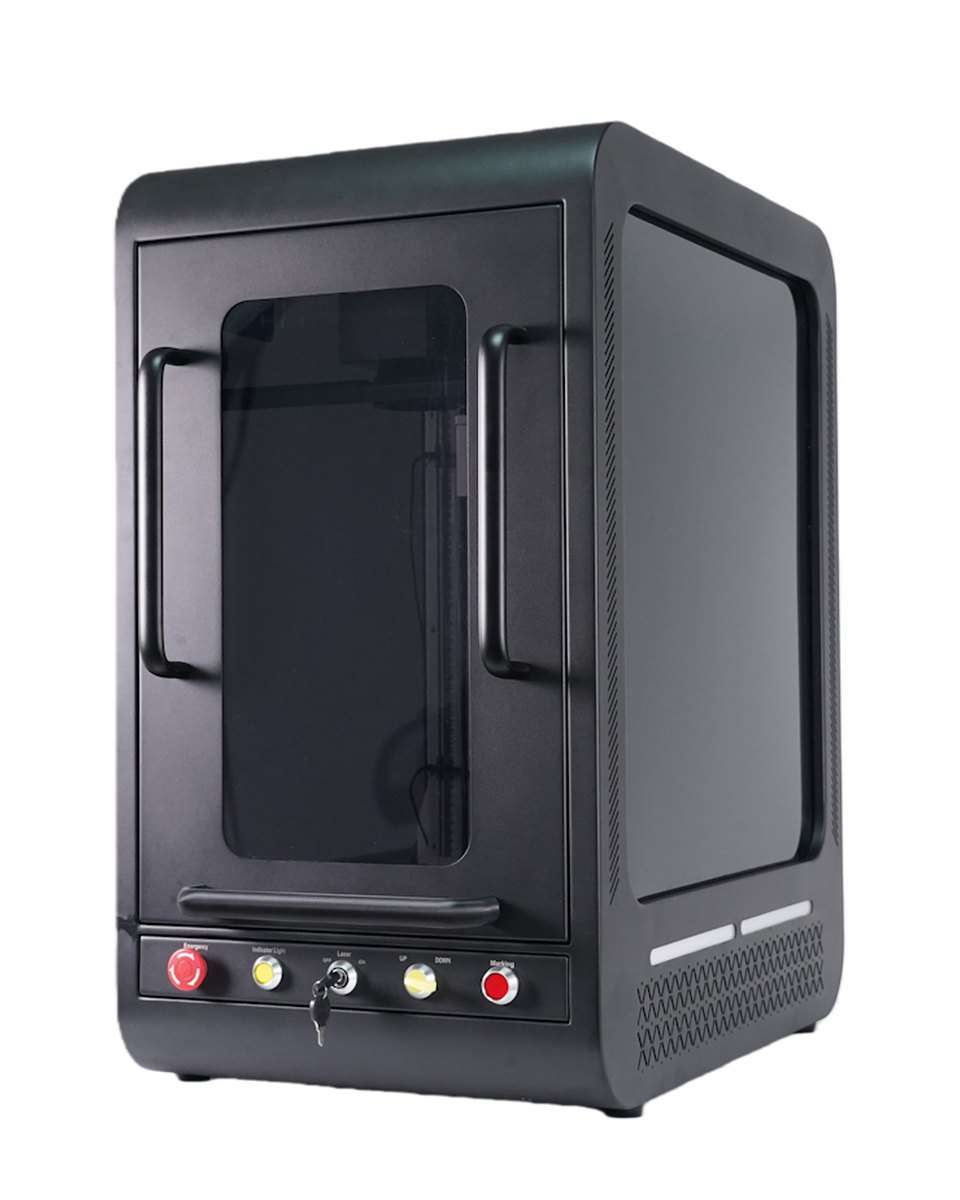
When a buyer asks us “Do my operators need glasses?”, the honest answer depends on the setup, not the laser. The same 30 W fiber source is Class 4 on an open table and Class 1 inside a closed cabinet.
Remember that Class 1 only holds while the cabinet is closed. During service, alignment or with the door forced open, the machine is Class 4 again. Only trained staff should do that work, with glasses on.
What HeatSign offers
- Enclosed fiber station: the HS-FL30E is a Class 1 cabinet with fume and eye protection.
- Enclosed UV and CO2: we build closed versions to order for factories that want Class 1 lines.
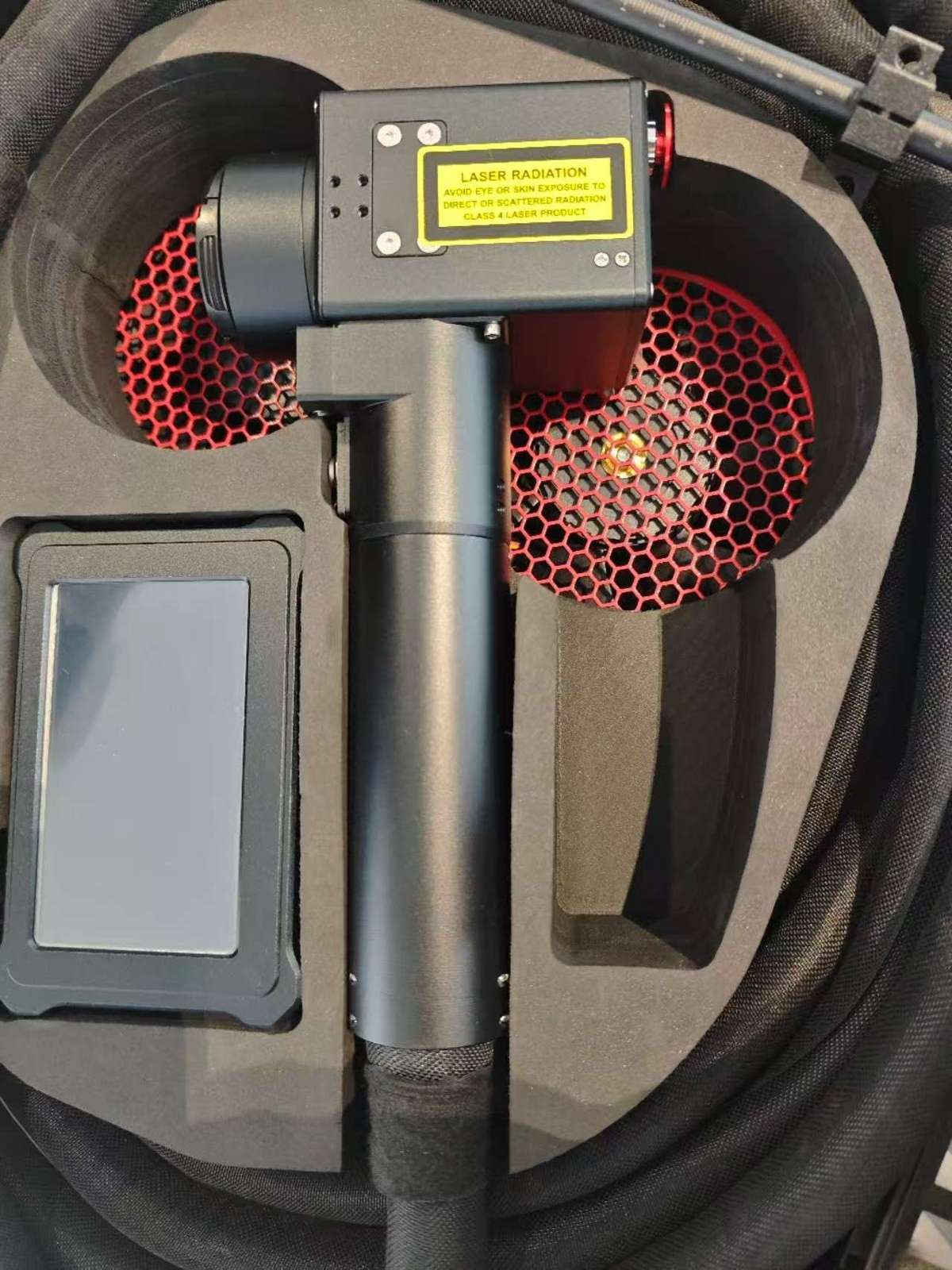
- Handheld: our newer handheld design meets Class 1 principles except for built-in fume extraction, so plan extraction on site. See the video below.
- Labels and paperwork: marking heads carry class or warning labels. For US shipments, we have an FDA registration number, available on request.
How Do You Control Class 4 Laser Hazards?
Use three layers, in this order. First, engineering controls such as enclosures, interlocks and key switches. Second, administrative controls such as a laser safety officer, training, signs and a controlled area. Last, personal protective equipment, mainly eyewear rated for your laser’s wavelength.
1. Engineering controls Work every time, no matter who is there
Beam enclosure that brings the machine to Class 1. Interlocks that stop the laser when a door opens. A key switch so only trained staff can start it. An emergency stop. A filtered viewing window. Fume extraction.
2. Administrative controls Depend on people following rules
A named laser safety officer. Written procedures for use, alignment and service. Training before anyone runs the laser. Warning signs at each entrance. A marked controlled area, called the nominal hazard zone.
3. Personal protective equipment The last line of defense
Laser safety glasses matched to the wavelength and power. Gloves and long sleeves where skin could meet the beam. Glasses are checked before each use.
Engineering controls come first because they work even on a busy night shift. A sign or a rule only works if people follow it. That is why many safety teams prefer an enclosed marker: it removes most of the second and third layers.
For open Class 4 machines, post signs at every door to the area. A good sign shows the laser type, wavelength, maximum power and the eyewear needed. Lock the area when the laser is on and nobody is inside, and keep shiny tools and jewelry away from the beam.
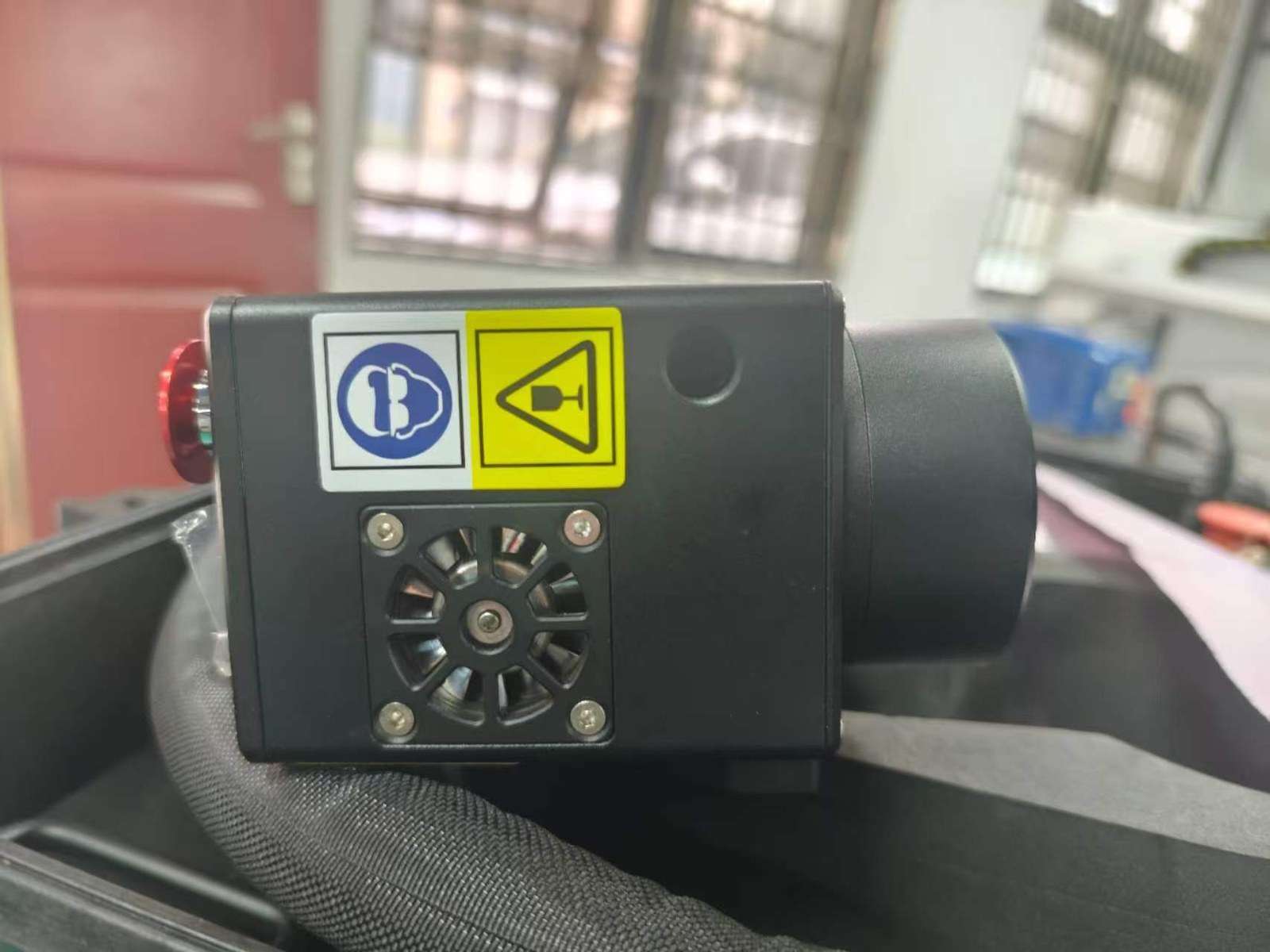
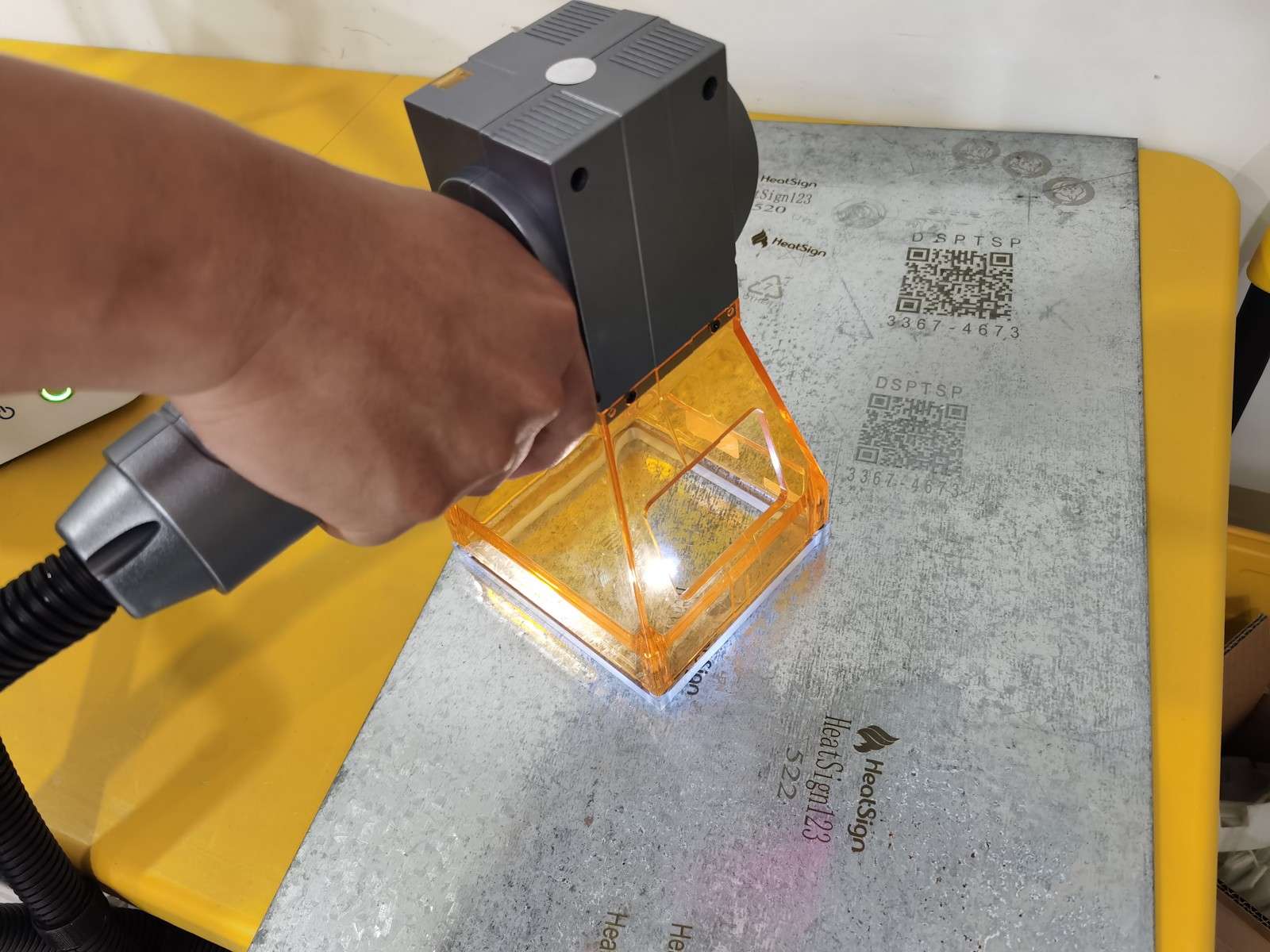
Fire and fumes are part of the same plan. Keep paper, cloth and solvents away from the beam, and keep an extinguisher nearby. Marking plastics, coatings and PVC makes fumes, so use a fume extractor with HEPA and carbon filters.
Which Laser Safety Glasses Do You Need?
Choose glasses rated for your laser’s exact wavelength, with enough optical density (OD) for its power. For open fiber markers, OD 5 to OD 7 or higher at 1,064 nm is common. Glasses for one laser type do not protect against another: fiber glasses do not stop UV or CO2 light.
Laser | Wavelength | What to look for | Watch out for |
|---|---|---|---|
Fiber | 1,064 nm | OD 5–7+ at 1,060–1,080 nm. EN 207 rating with R or M for pulsed lasers. | Invisible beam. Cheap unmarked glasses often miss their rating. |
CO2 | 10.6 µm | OD 5+ at 10,600 nm. | Far infrared. Do not rely on plain safety glasses or regular lenses. |
UV | 355 nm | OD 5+ at 355 nm. | Fiber glasses do not stop UV. HeatSign UV machines ship with UV-rated glasses. |
Green | 532 nm | OD 5+ at 532 nm, often with dark tinted lenses. | Used on some crystal engravers. |
Every pair should be marked with the wavelength and OD. In Europe, look for EN 207 markings such as “D 1064 LB7.” Check the frame and lenses before each shift, and replace any pair with scratches or cracks. Read more in our guide to OD4 vs OD6 laser safety glasses.

Which Laser Safety Standards Apply?
IEC 60825-1 sets laser classes and labels for products worldwide. ANSI Z136.1 covers safe use at work in the US. The FDA rule 21 CFR 1040.10 covers laser products sold in the US. EN 207 covers laser safety eyewear in Europe. OSHA enforces workplace laser safety through ANSI Z136.
Standard | Who it applies to | What it covers |
|---|---|---|
IEC 60825-1 | Laser makers, worldwide | Laser classes, emission limits, warning labels |
ANSI Z136.1 | Users, US workplaces | Safe use, laser safety officer, controls, training |
FDA 21 CFR 1040.10 | Products sold in the US | Product classes, labels, safety features, reports |
FDA Laser Notice 56 | Products sold in the US | Lets makers follow IEC 60825-1 instead of some FDA rules |
EN 207 | Eyewear, Europe | How laser glasses are tested and marked |
IEC 60825-4 | Machine builders | Laser guards and enclosures |
OSHA has no single laser rule. It refers to ANSI Z136.1 and the general duty to keep a workplace safe. So for a US factory, Z136.1 is the practical rulebook.
What Should You Check Before Buying a Laser Marking Machine?
Ask for the laser class, the labels, the interlock design, the key switch and emergency stop, the eyewear rating and the fume plan. Ask how the machine will reach Class 1 if your site wants it. Get the manuals and training material your safety team needs.
10 questions for your supplier
- What is the laser class of the source, and of the whole machine as delivered?
- Where are the class and warning labels on the machine?
- Does the enclosure have door interlocks that stop the laser?
- Is there a key switch and an emergency stop?
- Is the viewing window rated for this wavelength?
- Which safety glasses are included, and what OD and wavelength?
- Is fume extraction built in or separate, and what filters does it use?
- Is there an FDA registration for US shipments, if you are in the US?
- Which manuals, training videos and safety instructions come with it?
- Can the supplier build an enclosed version for your line?
If your safety team prefers no glasses on the shop floor, start with an enclosed Class 1 station. It is often simpler than training, signs and controlled areas for an open machine. Our guide to Class 1 vs Class 4 laser markers walks through that choice.
Which HeatSign Machines Help You Meet Laser Safety Rules?
For a Class 1 setup, choose the enclosed HS-FL30E fiber station, or an enclosed UV or CO2 station built to order. For on-site work, choose a handheld marker and plan glasses and extraction. Add a fume extractor for plastics, coatings and PVC.
 Class 1 station: enclosed fiber laser marker30 W fiber laser in a closed Class 1 safety cabinet with fume and eye protection. No glasses needed in normal use. $3,500–$7,000.See the HS-FL30E →
 On-site marking: handheld fiber laser marker1.5 kg head for large or fixed parts. Class 4 rules apply: glasses, a controlled area and extraction.See handheld markers →
 Clean air: industrial laser fume extractorFilters dust and gases from marking plastics, coatings and metals. Pairs with any HeatSign marker.See the fume extractor →
Need a marker that passes your safety audit?
Tell us your parts, your site rules and whether you want a Class 1 setup. HeatSign will suggest the machine, the enclosure and the safety kit, and send the documents your safety team asks for.
Laser Classes FAQ
What are the laser classes?
Under IEC 60825-1 there are seven: Class 1, 1M, 2, 2M, 3R, 3B and 4. They rank lasers by how much harm the accessible beam can do, from safe in normal use (Class 1) to able to burn eyes and skin and start fires (Class 4).
What makes a laser Class 4?
A continuous laser above 0.5 W (500 mW) is Class 4. Pulsed lasers are classed by energy per pulse. All industrial fiber, CO2 and UV marking lasers, from 3 W to 100 W, are Class 4 sources.
Are Class 4 lasers illegal?
No. Class 4 lasers are legal and common in factories, labs and hospitals. The rules require controls such as labels, interlocks, trained users and eyewear. Separate rules restrict high-power handheld laser pointers in many countries.
Is a laser marking machine Class 1 or Class 4?
The laser inside is always Class 4. A fully enclosed station with door interlocks is a Class 1 machine. An open desktop, flying or handheld marker is used as a Class 4 product.
Do I need safety glasses with a Class 1 laser marker?
Not in normal use, with the doors closed. You do need rated glasses during service or alignment, when the enclosure is open and the machine is Class 4 again.
Can one pair of laser glasses protect against every laser?
No. Glasses are rated for specific wavelengths. Fiber glasses at 1,064 nm do not protect against UV at 355 nm or CO2 at 10.6 µm. Check the wavelength and OD printed on the frame.
Do I need a laser safety officer?
Under ANSI Z136.1, sites using Class 3B or Class 4 lasers should name a laser safety officer. That person sets the rules, trains users, marks the hazard zone and checks controls. An enclosed Class 1 machine needs far less.
Is the red aiming beam on a laser marker dangerous?
The red aiming beam is usually Class 2, below 1 mW, so a brief look is not harmful. The marking beam that follows is invisible and Class 4, so never look into the marking head.
What is the difference between IEC and FDA laser classes?
IEC uses 1, 1M, 2, 2M, 3R, 3B and 4. The FDA uses I, IIa, II, IIIa, IIIb and IV. They are close, and FDA Laser Notice 56 lets makers label to IEC 60825-1 for US sales.
Do laser marking machines need fume extraction?
Yes, for most jobs. Marking plastics, coatings and PVC releases fine dust and gases. Use an extractor with HEPA and carbon filters. Bare-metal annealing makes the least fume.
Sources
- IEC 60825-1, Safety of laser products: equipment classification and requirements
- IEC 60825-4, Safety of laser products: laser guards
- Laser Institute of America, ANSI Z136.1 Safe Use of Lasers
- US FDA, 21 CFR 1040.10 Laser products and Laser Notice 56
- OSHA Technical Manual, Laser Hazards
- EN 207, Personal eye-protection equipment against laser radiation
- Carnegie Mellon University EHS, Laser Cutter Safety guideline
- HeatSign laser marking machine specifications and safety labels