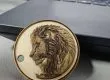
Sub-surface laser engraving is a precise technique that embeds intricate designs and text beneath the surface of materials like crystal, glass, and transparent plastics, without altering the exterior. You may also hear it called laser crystal engraving or 3D crystal engraving.
It is used for awards, photo gifts, keepsakes and brand marks. The image seems to float inside the block, and it cannot wear off.

What Is Sub-Surface Engraving?
Sub-surface engraving is a laser technique that creates intricate images or text beneath the surface of materials like glass, crystal, or transparent plastics, while leaving the exterior completely intact.
Unlike traditional engraving, which alters the surface by etching or carving, sub-surface engraving works by focusing the laser’s energy inside the material. The outside stays smooth and polished, and the design inside is permanent.

Sub-Surface Engraving vs. Standard Engraving
Sub-surface engraving stands apart from standard engraving by embedding the design within the material rather than on its surface. So the design cannot fade or be scratched, and no one can change it without breaking the block.
Sub-surface engraving
- The design sits inside the crystal
- The outside stays smooth and clear
- Cannot be scratched, faded or rubbed off
- The image seems to float, with real depth
Standard surface engraving
- The design is cut into the surface
- Leaves a frosted, rough area
- Can wear, chip or collect dirt over time
- Flat look, seen from the front only
The designs appear to “float” inside the material, adding a level of depth and elegance that is particularly appealing for luxury items, personalized gifts, and high-end decor. That is why it is a common choice for awards and gifts that must look good for years.
Which Crystals Are Suitable for Sub-Surface Laser Engraving (SSLE)?
Not all crystals are suitable for SSLE. K9 crystal is the most common choice for gifts and awards. Optical glass, borosilicate glass, sapphire, fused silica and lead crystal also work.
Crystal type | Description |
|---|---|
Known for its clarity and hardness, making it ideal for detailed engravings. | |
Optical Glass | Offers excellent transparency and is widely used in high-precision engravings. |
Borosilicate Glass | Handles sudden temperature changes (thermal shock) well, suitable for intricate designs. |
Sapphire | Extremely hard and scratch-resistant, good for durable engravings. |
Fused Silica | Very clear and stable when heated, used for high-end engravings. |
Lead Crystal | Known for its brilliance and clarity, often used in luxury and decorative items. |
How Does Sub-Surface Laser Engraving Work?
Sub-Surface Laser Engraving (SSLE) focuses intense laser energy into precise points inside a transparent material, such as crystal or glass. The beam passes through the surface without damaging it.

The machine sets how deep inside the block the beam comes to a point (the focal depth). At that point the energy is so concentrated that it makes a microscopic crack, which shows as a tiny white dot.
The software places thousands or millions of these dots, one by one, to build 2D, 2.5D or true 3D images that seem to float inside the solid block. This method preserves the material’s external smoothness while creating permanent, tamper-proof internal designs.
How Do You Engrave a Photo Inside a Crystal, Step by Step?
Clean the crystal, place it with its shortest side as the height, send your file over Wi-Fi, pick a template, enter the crystal’s real thickness, then engrave. A 2D photo works as it is. 2.5D and 3D files can be made with AI tools, so you do not need 3D design skills.

- Prepare the file. For 2D, use a normal JPG photo. For 2.5D, combine the photo with a depth map (a grey image that tells the machine how far each point stands out) into one file. For 3D, use a GLB model (a common 3D file format). AI tools can turn one photo into a 2.5D or 3D file in minutes.
- Clean the top of the crystal. Wipe the side that faces the laser with a polishing pad. Dust and fingerprints scatter the beam.
- Place the crystal the right way. Longest side along the Y axis, middle side along the X axis, shortest side as the height.
- Send the file. Connect your phone or computer to the same Wi-Fi as the machine. Type the machine’s IP address (its network address) into a browser and drag the file in.
- Pick a template. Crystal 1 is the fastest, for everyday 2D and 2.5D photos. Crystal 2 adds energy when edges look faint. Crystal Ball is the slowest and strongest, for 3D models and dense designs.
- Set the size and the real thickness. Enter the crystal’s true thickness, and the machine centres the image in the block. Keep a 2.5D image 3–7 mm deep (never over 10 mm) so it does not stretch.
- Check the position and engrave. Use the Locate frame (a light outline that shows where the image will go) to line up the crystal. If the frame is hard to see, lay a sheet of white paper on top for a moment.
Shop tips
- Picture looks faint? Switch to Crystal 2 or Crystal Ball, or raise the power by 5–10%.
- Blurry, too many white spots, or the crystal cracks? Lower the power, or add more space between the dots.
- Keep the design inside the engraving size. On the HS-GL20P, the largest design is about 70 mm wide, 70 mm long and 50 mm tall inside the block.
What Can You Engrave Inside a Crystal: 2D, 2.5D or 3D?
2D engraving puts a flat photo, logo or text inside the block. 2.5D adds depth to a photo, so faces look rounded. 3D builds a full model you can see from every side.

2D
Flat photo, logo or text
File: JPG, PNG or BMP photo.
How to make it: use the photo as it is.
Best for: logos, text, everyday photo gifts.
Easy with AI
2.5D
Photo with depth
File: photo + depth map, merged into one file.
How to make it: AI tools make the depth map from one photo.
Best for: portraits and pets with a “lifted” look.
3D
Full model, every side
File: GLB model.
How to make it: AI image-to-3D tools or 3D software.
Best for: figures, buildings, 360° keepsakes.
Common jobs include employee service awards, sales trophies, team awards, client gifts, wedding portraits and pet memorials.
What Are the Advantages of Sub-Surface Laser Engraving in Crystal?
The design is protected inside the crystal, so it lasts. And the floating 3D look adds depth that a surface mark cannot give. For more examples, see our page on laser engraving in crystal.
Durability and permanence
The engraving sits inside the crystal, so wear, water and cleaning cannot reach it. That makes it a good fit for keepsakes and awards that must last.
Looks and function
The image has real depth, which a surface mark cannot give. It is also tamper-proof: no one can change it without breaking the block.
Which Crystal Engraver Should You Choose: Green or UV?
Both green and UV crystal engravers engrave inside crystal and glass. A green laser is several times faster, so it suits shops where customers wait for their piece. A UV crystal engraver gives finer detail at a slightly lower price, but it is much slower. If you mainly mark the surface of glass or acrylic, a standard UV laser marking machine is the better buy.
 For fast, while-you-wait orders: HS-GL05 green laser532 nm green laser. Several times faster than a UV crystal engraver, about 5 minutes for a standard 3D portrait. Bright white dots, built-in Wi-Fi so you can send photos from your phone, and an automatic Z axis (it moves the laser head up and down) that sets the focus for each crystal size. Good for market stalls, gift shops and events.View the HS-GL05 →
 For fine detail on a smaller budget: HS-GL20P UV laser355 nm UV laser. Finer, even dots for delicate text and photos, and a slightly lower price, but much slower. The largest design it can engrave is about 70 × 70 mm, up to 50 mm tall inside the block. Compact, one-click start, Wi-Fi file transfer.View the HS-GL20P →
Green crystal engraver (HS-GL05) | UV crystal engraver (HS-GL20P) | |
|---|---|---|
Speed | Several times faster | Much slower |
Detail | Bright, high-contrast dots | Finer, more delicate dots |
Price | Higher | A little lower |
Best for | Stalls, gift shops, events, while-you-wait orders | Detailed pieces where speed matters less |
For Marking Glass and Acrylic Surfaces: a Standard UV Laser Marking Machine
If most of your work is on the surface of glass, acrylic, plastic or coated metal, choose a standard UV laser marking machine. Its marking field is 150 × 150 mm: this is the largest flat area the laser can mark in one go, without moving the part. It can also put 2D photos inside crystal and glass, and it costs less than a crystal engraver. See our UV laser marking guide.
Green Laser vs. UV Laser: Which Is Better for Crystal Engraving?
Green (532 nm) and UV (355 nm) lasers both work on glass, but they do different jobs. For bright 3D images inside K9 crystal, a green laser is the usual choice. A UV marking laser does its best work on surfaces.

The table compares a green crystal engraver with a standard UV marking laser.
Feature | Standard UV marking laser (355 nm) | Green crystal engraver (532 nm) |
|---|---|---|
Primary strength | Surface cold marking (marking with very little heat) and plastics: very fine quality on glass surfaces, plastics, and delicate electronics. | 3D sub-surface engraving (SSLE): the common choice for bright, visible 3D portraits inside crystal. |
Internal engraving effect | Subtle and ultra-fine: can engrave inside, but creates finer, mist-like dots with lower contrast. Good for delicate internal text. | Bright and high contrast: creates distinct, bright white dots that make 3D images “pop” inside the block. |
Surface etching quality | Smooth: “cold marking” creates a refined, frosted texture without chipping or micro-cracks. | Good: can mark surfaces, but generates slightly more heat stress than UV. |
Material versatility | High: glass, crystal, plastics, silicone, TPE (a soft, rubber-like plastic), and coated metals. | Focused: mainly transparent materials (K9 crystal, glass, acrylic). |
Typical jobs | Cosmetics, wine glasses, phone cases, electronic chargers. | Crystal cubes, 3D wedding portraits, trophies. |
What Are the Applications of 2D/3D Subsurface Laser Engraving?
2D and 3D subsurface laser engraving are used for gifts and awards, art and decor, product branding, research and medical marking, and anti-counterfeiting.
1. Corporate and Personalized Gifts
Crystal awards and trophies: 3D subsurface engraving is widely used for custom awards and trophies, where intricate designs, logos, and personalized text are embedded within crystal. Designs that appear to float inside the material add elegance and a unique visual impact.
Personalized keepsakes: Items such as glass cubes, ornaments, and photo frames are often engraved with 2D or 3D images for personal gifts. These engravings can feature everything from portraits to special messages, making each piece a memorable keepsake.

2. Art and Decoration
Custom artwork: Artists and designers use 3D subsurface engraving to create distinctive art pieces, with complex, multi-layered images inside glass or crystal.
Interior design elements: 2D and 3D engravings are also used in glass panels, windows, and mirrors, where they add a sophisticated touch to modern or traditional interiors.
3. Industrial and Commercial Applications
Product marking and branding: Companies embed logos, serial numbers, and other identifiers within products. The marks are permanent and resistant to tampering, ideal for high-value items and brand protection.
Architectural models and prototypes: Architects and engineers put small 3D models of buildings or parts inside glass blocks to show the design.
4. Scientific and Research Applications
Medical devices: Subsurface engraving can mark instruments and devices with serial numbers and calibration data. The marks are permanent and do not affect the device surface.
Microscopy and research: Labs put tiny labels and models inside glass for research and experiments.
5. Security and Authentication
Tamper-proof markings: Hidden beneath the surface, these marks are hard to alter or remove, which helps against counterfeiting on valuable items, documents and ID cards.
Luxury goods authentication: High-end brands add discreet authentication marks inside products such as watches, jewelry, and electronics.

Looking to add durability, precision and stunning looks to your products?
Our green and UV crystal engravers make 2D and 3D engravings for custom gifts, luxury branding and secure markings. Send us your crystal sizes and daily volume, and HeatSign will suggest the right machine.
Sub-Surface Laser Engraving FAQ
What is sub-surface laser engraving?
Sub-surface laser engraving is a technique where a focused laser creates images or text inside materials like crystal or glass, without touching or marking the outer surface. It produces a floating 3D effect that is elegant and permanent.
How is sub-surface engraving different from traditional surface engraving?
Traditional engraving cuts into the surface, which can wear over time. Sub-surface engraving embeds the design inside the material, making it scratch-proof, tamper-resistant, and visually more premium.
Which materials are suitable for sub-surface laser engraving?
Ideal materials include K9 crystal, optical glass, borosilicate glass, fused silica, sapphire, and lead crystal. These materials can withstand internal laser pulses without cracking or distortion.
Can sub-surface engraving produce 3D designs?
Yes. Modern engraving machines can create both 2D images and complex 3D designs, such as portraits, architectural models, logos, layered artwork, and floating effects within the crystal.
Is sub-surface engraving durable?
Yes. Since the design is created inside the crystal, it is fully protected from scratches, fading, moisture, and external damage, so it stays clear for a long time.
What lasers are used for sub-surface engraving?
Green lasers with a wavelength of 532 nm and UV lasers with a wavelength of 355 nm are commonly used. They offer high precision and controlled energy, allowing multi-layer internal engraving without damaging the crystal’s surface.
Is sub-surface engraving used for industrial purposes?
Yes. It is widely used for brand authentication, serial numbering, anti-counterfeiting markings, product branding, and architectural prototypes due to its tamper-proof and professional finish.
Is sub-surface engraving good for gifts and awards?
Yes. It is a popular choice for photo crystals, corporate awards, trophies, luxury keepsakes, and custom décor items thanks to its floating 3D look.
How long does it take to engrave a crystal?
Most pieces take 5 to 30 minutes, depending on size, detail and the laser. A green laser is several times faster than a UV crystal engraver.
What files can I use for crystal engraving?
JPG, PNG or BMP photos for 2D. A merged photo-and-depth file for 2.5D. GLB models for 3D.
Can I send files from my phone?
Yes. Connect your phone to the same Wi-Fi as the machine, open the machine’s address in a browser, and drag the file in.